Seborrheic Dermatitis Management Strategies: A Clinical Guide
By JustScalp Editorial Team · Reviewed by a Dermatologist · 14 min read
Seborrheic dermatitis is one of the most common chronic scalp conditions in the world — affecting up to 5% of the global population. Yet it remains widely misunderstood, misdiagnosed, and poorly managed. If you're dealing with persistent flaking, redness, itching, or greasy scales that keep coming back no matter what you try, this guide is for you.
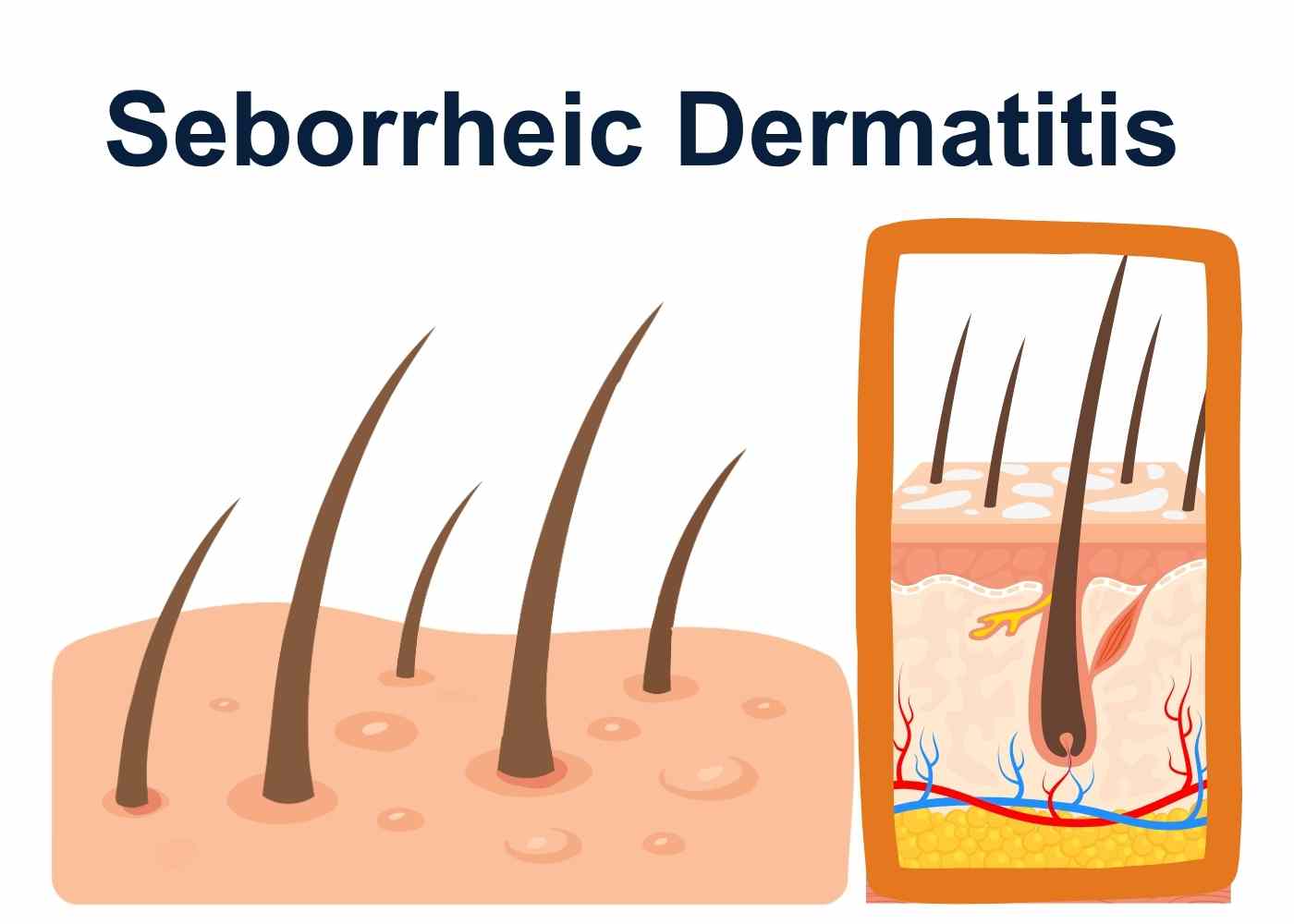
Seborrheic dermatitis (SD) is a chronic, relapsing inflammatory skin condition that primarily affects areas with high concentrations of sebaceous glands — most notably the scalp, but also the face, ears, chest, and back. On the scalp it manifests as flaking, itching, redness, and greasy or waxy scale buildup.
It is often confused with simple dandruff (pityriasis capitis). While the two exist on a spectrum, SD is the more severe form — characterised by more pronounced inflammation, larger scales, and a tendency to affect areas beyond the scalp.
✓ Seborrheic Dermatitis
- Greasy, yellowish scales
- Visible redness and inflammation
- Affects scalp, face, ears, chest
- Chronic — flares and remissions
- Associated with Malassezia overgrowth
- Responds to antifungal treatment
✗ Often Confused With
- Psoriasis (thicker, silvery scales)
- Atopic dermatitis / eczema
- Simple dandruff (no redness)
- Contact dermatitis (reaction-based)
- Tinea capitis (fungal ringworm)
- Rosacea (face only, no scalp)
The current scientific consensus points to three interacting factors:
Malassezia is a naturally occurring lipid-dependent yeast that lives on virtually every human scalp. In those with SD, the yeast proliferates excessively and breaks down sebum into oleic acid — a fatty acid that penetrates the scalp barrier and triggers an inflammatory response.
Sebaceous glands produce sebum to keep skin moisturised. In areas of high sebum production, Malassezia thrives because it feeds on the fatty components of sebum — which is why SD is most common in the scalp, forehead, nose, ears, and central chest.
Not everyone with high Malassezia counts or oily skin develops SD. The third factor is an individual inflammatory immune response that over-reacts to the yeast's byproducts — which is why stress is such a reliable trigger for flare-ups.
"Seborrheic dermatitis is not something you caused by washing too little — or too much. It's a chronic condition rooted in your scalp's unique microbiome and immune reactivity. The goal of management is not a cure, but long-term control."
Flare-ups are almost always triggered by identifiable factors. Learning to recognise and manage your personal triggers is one of the most powerful long-term management strategies available.
Cortisol disrupts immune regulation, increasing inflammatory flares
Cold dry winters and humid summers both trigger distinct flares
Impairs immune function and disrupts skin barrier repair
Sulphates, alcohol, and fragrances strip the scalp barrier
Dilates blood vessels and promotes inflammation
Warm moist environments accelerate Malassezia growth
The first-line treatment for SD is topical antifungal therapy targeting Malassezia. This is the most evidence-backed approach and should form the foundation of any management plan.
| Treatment | How It Works | Best Used For |
|---|---|---|
| Ketoconazole 2% shampoo | Antifungal — disrupts Malassezia cell membrane. Gold standard first-line treatment. | Active flares. Use 2–3x per week, leave on 5 min before rinsing. |
| Zinc Pyrithione shampoo | Antifungal and antibacterial. Reduces Malassezia density and sebum production. | Mild-to-moderate SD and maintenance between flares. |
| Selenium Sulphide 1–2.5% | Reduces Malassezia growth and slows skin cell turnover rate. | Moderate SD; effective for thick scale buildup. |
| Coal Tar shampoo | Slows cell proliferation and has anti-inflammatory properties. | Stubborn cases; less cosmetically acceptable. |
| Ciclopirox 1% shampoo | Broad-spectrum antifungal with anti-inflammatory action. | Moderate-to-severe SD; effective on resistant cases. |
| Topical corticosteroids | Rapidly suppress inflammation. Not antifungal — treats symptom only. | Short-term during acute flares only. Not for maintenance. |
| Calcineurin inhibitors | Immunomodulators — reduce inflammation without steroid side effects. | Facial SD; alternative when steroids are inappropriate. |
How you care for your scalp every day determines how frequently you experience flares. The following routine is designed for active management: see best vitamins for scalp care
Wash every 2–3 days minimum
Contrary to old advice, regular washing is beneficial for SD. Allowing sebum to accumulate creates a richer environment for Malassezia. Daily washing may be appropriate during active flares.
Use lukewarm water only
Hot water strips the scalp barrier and increases sebum overproduction. It also dilates blood vessels, worsening redness. Lukewarm is always the right temperature for an SD-prone scalp.
Apply medicated shampoo correctly
Antifungal shampoos need contact time — minimum 3–5 minutes on the scalp before rinsing. Apply to wet scalp, massage gently, set a timer. This single change dramatically improves efficacy.
Avoid common scalp irritants
Sulphates (SLS/SLES), fragrances, alcohol-based styling products, and silicone-heavy conditioners all compromise the scalp barrier. Eliminate these during active flares.
Never scratch — exfoliate instead
Scratching damages the scalp barrier and worsens inflammation. Use a gentle scalp exfoliator or soft-bristle brush before washing to loosen flakes without tearing the skin.
Condition below the ears only
Conditioner applied to the scalp increases the lipid-rich environment that Malassezia thrives in. Apply from mid-shaft to ends only — never directly to the scalp.
Dry hair promptly after washing
A damp, warm scalp is an ideal environment for yeast proliferation. Dry promptly using low heat. Avoid going to bed with wet hair during active flares.
Tea Tree Oil
Demonstrated antifungal activity against Malassezia. A 5% shampoo shows efficacy comparable to some conventional treatments. Always dilute — 2–3 drops per tablespoon of carrier oil.
Apple Cider Vinegar Rinse
pH ~3.0 temporarily creates a less hospitable environment for Malassezia. Dilute 1:4 with water, apply post-shampoo, leave 5 minutes. Do not use on broken or highly inflamed scalp skin.
Aloe Vera
Demonstrated anti-inflammatory, antifungal, and soothing properties. Use pure gel (no alcohols or fragrances), apply 30 minutes before washing, then rinse thoroughly.
Dietary Adjustments
Reduce high-sugar foods, processed carbs, and alcohol. An anti-inflammatory diet rich in omega-3s, zinc, and B vitamins may help reduce flare frequency over time.
SD is a chronic, relapsing condition — there is currently no permanent cure. The realistic goal is remission maintenance: keeping flares infrequent, mild, and short.
- Rotate your antifungal shampoo every 3–6 months: Malassezia can develop reduced sensitivity to a single active. Rotate between ketoconazole, zinc pyrithione, and selenium sulphide.
- Maintain treatment during remission: Drop to once-weekly medicated washing when clear. Stopping entirely is the most common cause of rapid relapse.
- Track your triggers: Keep a simple log of sleep, stress, diet, and scalp condition. Patterns emerge over weeks that allow proactive intervention.
- Manage stress as a medical priority: Exercise, consistent sleep, and mindfulness demonstrably reduce inflammatory cytokine levels — and SD flare frequency.
- See a dermatologist if OTC treatments fail after 6–8 weeks: Stronger formulations, combination therapies, or investigation of contributing conditions may be needed.
- Protect from extremes: Cold dry air and intense heat both trigger flares. Use a loose hat in winter; avoid prolonged heat styling during active flares.
- No improvement after 6–8 weeks of consistent OTC antifungal treatment
- Signs of secondary bacterial infection — increasing pain, warmth, pus, or fever
- Severe or rapidly spreading inflammation beyond the scalp to face, ears, or chest
- Significant hair loss associated with the SD
- Uncertainty about diagnosis — SD can closely mimic psoriasis, eczema, or tinea capitis
- Condition in an infant (cradle cap) not responding to gentle home care within 4 weeks
Consistency over intensity is the key to long-term scalp health with seborrheic dermatitis.
This is one of the most common questions people with SD ask, and the answer is nuanced. Seborrheic dermatitis does not directly destroy hair follicles the way scarring alopecia does. However, the chronic inflammation it creates around follicles can meaningfully affect the hair growth cycle over time.
The mechanism works like this: persistent perifollicular inflammation shortens the anagen (active growth) phase, pushing more follicles prematurely into the telogen (resting) phase. This seasonal and inflammatory link is a growing concern in clinical dermatology; as highlighted in a recent Daily Mail report on winter dandruff and hair loss, untreated scalp irritation during colder months can significantly accelerate thinning if not managed with the right active ingredients.
The result is a diffuse, gradual thinning that can be mistaken for early androgenetic alopecia. In people who already have a genetic predisposition to pattern hair loss, active SD can accelerate the process by amplifying the inflammatory component of follicular miniaturisation.
The mechanism works like this: persistent perifollicular inflammation shortens the anagen (active growth) phase, pushing more follicles prematurely into the telogen (resting) phase. The result is a diffuse, gradual thinning that can be mistaken for early androgenetic alopecia. In people who already have a genetic predisposition to pattern hair loss, active SD can accelerate the process by amplifying the inflammatory component of follicular miniaturisation.
The good news: hair loss caused by SD-related inflammation is typically reversible once the condition is brought under consistent control. The follicles are not destroyed, only suppressed. This is why managing SD actively, rather than waiting for flares to resolve on their own, has direct long-term benefits for hair density.
The scalp hosts a complex microbial community of fungi, bacteria, and other microorganisms in a state of dynamic balance. In healthy scalps, this ecosystem is self-regulating. In people with SD, research published in 2024 has revealed that the disruption is not limited to the overgrowth of Malassezia, but involves a broader dysbiosis of the entire scalp microbiome.
| Organism | Role in Healthy Scalp | Status in SD |
|---|---|---|
| Malassezia restricta | Normal flora; small amounts | Overabundant — produces inflammatory oleic acid |
| Staphylococcus spp. | Balanced by other bacteria | Elevated — amplifies inflammatory response |
| Cutibacterium acnes | Protective role; competes pathogens | Reduced — loss of protective competition |
| Scalp pH | Mildly acidic (4.5–5.5) | Elevated — alkaline shift favours Malassezia |
"If 2024 was the year of scalp care, 2025 is the year of the scalp microbiome. Balancing microbial diversity is now recognized as central to the long-term management of seborrheic dermatitis."
Seborrheic dermatitis is not limited to adults. Its most common pediatric form is cradle cap (cradle cap), which typically affects infants within the first few weeks after birth. Despite its concerning appearance, it is usually harmless.
✓ Typical Cradle Cap
- Thick, crusty yellow or brown scales
- Appears in first 3 months of life
- Resolves naturally within weeks/months
- Generally not itchy for the baby
⚠️ When to See a Doctor
- Scales spreading rapidly to face/body
- Rash appears red, inflamed, or weeping
- Baby seems uncomfortable or scratching
- Signs of infection (warmth, pus, odour)
Roflumilast Foam (2024)
A newly approved PDE4 inhibitor. A non-steroidal formulation with strong anti-inflammatory effects, suitable for sensitive areas.
JAK Inhibitors
Promising systemic options for moderate-to-severe cases that do not respond to topical treatments.
of adults report impact on self-esteem
rates of anxiety vs. general population
of global adult population affected
The Bottom Line
Seborrheic dermatitis is chronic — but highly manageable. With the right combination of antifungal treatment, trigger identification, and consistent scalp care, the vast majority of SD sufferers can achieve long periods of clear, comfortable scalp.
- SD is driven by Malassezia, sebum, and immune reactivity — not poor hygiene
- Antifungal shampoos are first-line treatment — contact time matters
- Maintain treatment during remission with weekly medicated washing
- Identify and manage personal triggers — stress is the most common
- Rotate antifungal actives every few months to prevent reduced sensitivity
- See a dermatologist if OTC treatments fail after 6–8 weeks
Consistency over intensity is the key to long-term scalp health with seborrheic dermatitis.
The Timeless Allure of Bridal Tiaras
Explore the fascinating history, precious materials, and iconic styles of wedding tiaras.
Read Article → Natural RemediesBest Herbal Teas for Scalp Inflammation
Discover the most effective botanical brews to soothe irritation from the inside out.
Read Article → ProtectionHard Water and Scalp Damage Prevention
How mineral buildup from hard water affects your scalp and how to neutralize it.
Read Article →