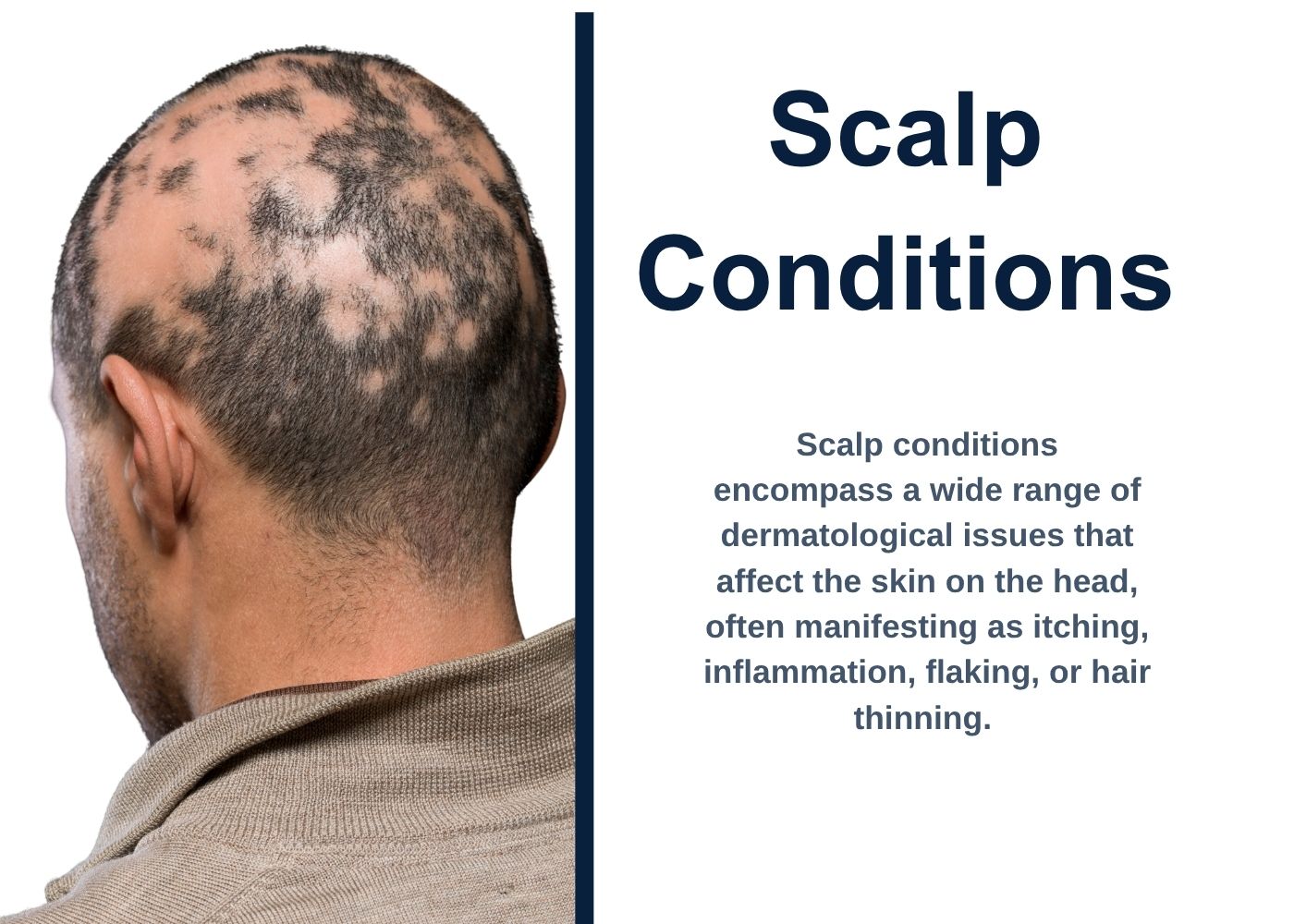
Scalp Conditions
Your scalp hosts a complex ecosystem of skin, follicles, sebaceous glands, and microorganisms — and when that balance is disrupted, a range of conditions can emerge. Here are the 10 most common scalp conditions, what causes them, how to recognise them, and what actually works to treat them.
Dandruff (Pityriasis Capitis)
Affects up to 50% of adults worldwide — the most common scalp conditionSigns
- White/grey flakes on hair and shoulders
- Mild scalp itch
- No significant redness or inflammation
- Worsens with stress or seasonal changes
Causes
- Malassezia yeast overgrowth
- Excess sebum production
- Stress and hormonal changes
- Cold, dry weather
Treatment
- Zinc pyrithione shampoo (1st line)
- Ketoconazole 2% for persistent cases
- Selenium sulphide shampoo
- Rotate actives every 3–6 months
Seborrheic Dermatitis
Affects 5% of the global population — the more severe end of the dandruff spectrumSigns
- Greasy, yellowish scales
- Visible redness and inflammation
- Affects scalp, face, ears, chest
- Chronic flares and remissions
Causes
- Malassezia + sebum + immune reactivity
- Stress is the most common trigger
- Hormonal changes
- Cold weather, harsh products
Treatment
- Ketoconazole 2% shampoo (gold standard)
- Zinc pyrithione for maintenance
- Short-term topical corticosteroids
- Stress management is essential
Scalp Psoriasis
Affects 2–3% of the population — often mistaken for severe dandruffSigns
- Thick, silvery-white plaques
- Redness extending beyond hairline
- Scales are dry, not greasy
- Temporary hair loss in affected areas
Causes
- Autoimmune T-cell dysregulation
- Genetic predisposition
- Stress is a major flare trigger
- Infections, certain medications
Treatment
- Coal tar or salicylic acid shampoos
- Topical corticosteroids (dermatologist)
- Vitamin D analogues (calcipotriol)
- Biologics for severe cases
Alopecia Areata
Affects 2% of people at some point in life — sudden patchy hair lossSigns
- Round or oval smooth bald patches
- Sudden onset — often overnight
- Exclamation mark hairs at patch edges
- No scarring, skin looks normal
Causes
- Autoimmune attack on follicles
- Genetic predisposition
- Stress as a common trigger
- Associated with thyroid disorders
Treatment
- Intralesional corticosteroid injections
- Topical minoxidil (supports regrowth)
- JAK inhibitors (baricitinib — newer)
- Dermatologist referral essential
Scalp Folliculitis
Bacterial or fungal infection of the hair follicles — common and often recurringSigns
- Small red bumps or pustules on scalp
- Tenderness or pain around follicles
- Clusters at hairline or crown
- Mild to significant itching
Causes
- Staphylococcus aureus (most common)
- Fungal infection (Pityrosporum)
- Excessive sweating or oil buildup
- Tight hairstyles or helmet wear
Treatment
- Antibacterial shampoo (benzoyl peroxide)
- Topical antibiotics (clindamycin)
- Antifungal shampoo for fungal type
- Oral antibiotics for severe cases
Tinea Capitis (Ringworm)
Fungal infection — most common in children, but adults can be affectedSigns
- Ring-shaped scaly patches
- Brittle hair that breaks at scalp level
- Black dot appearance (broken stubs)
- Possible lymph node swelling
Causes
- Trichophyton or Microsporum fungi
- Direct contact with infected person
- Shared combs, hats, or pillows
- Contact with infected animals
Treatment
- Oral griseofulvin or terbinafine (essential)
- Topical antifungals alone are insufficient
- Selenium sulphide shampoo (adjunct)
- Treat close contacts and household
Scalp Eczema (Atopic Dermatitis)
Chronic inflammatory skin condition — often part of the atopic triad with asthma and hay feverSigns
- Intense, persistent itching
- Red, inflamed, dry patches
- Fine white/grey scales (dry, not greasy)
- Worsens with heat, sweat, stress
Causes
- Filaggrin gene mutation (barrier defect)
- Allergic triggers (dust, pollen, foods)
- Stress and immune dysregulation
- Harsh shampoos or hot water
Treatment
- Fragrance-free, sulfate-free shampoos
- Topical corticosteroids for flares
- Calcineurin inhibitors (tacrolimus)
- Dupilumab for severe atopic cases
Androgenetic Alopecia (Pattern Hair Loss)
Affects 50% of men by 50 and up to 40% of women — most common hair loss conditionSigns
- Gradual hairline recession (men)
- Diffuse crown thinning (women)
- Miniaturised, finer hair shafts
- Family history of hair loss
Causes
- DHT binding to follicle receptors
- Genetic androgen receptor sensitivity
- Perifollicular inflammation
- Age-related collagen decline
Treatment
- Finasteride (men — most effective)
- Minoxidil topical or oral
- Ketoconazole shampoo (adjunct)
- Hair transplant for advanced cases
Scalp Contact Dermatitis
Reaction to a specific ingredient or substance — allergic or irritant-drivenSigns
- Redness, burning, and itching
- Swelling at hairline or ears
- Blistering in severe cases
- Onset hours to days after exposure
Causes
- PPD in permanent hair dyes
- Fragrances and preservatives
- Sulfates stripping barrier (irritant)
- Formaldehyde-releasing preservatives
Treatment
- Identify and remove the trigger first
- Topical corticosteroids for acute reaction
- Patch testing to identify allergen
- Switch to fragrance-free, PPD-free products
Scarring Alopecia (Cicatricial Alopecia)
Rare but serious — permanent destruction of hair follicles requires urgent treatmentSigns
- Smooth, shiny scalp in affected areas
- No follicle openings visible
- May be painless or burn/itch
- Rapidly spreading in active disease
Causes
- Autoimmune attack on follicle stem cells
- Lichen planopilaris (most common)
- Discoid lupus erythematosus
- Folliculitis decalvans (bacterial)
Treatment
- Urgent dermatologist referral essential
- Hydroxychloroquine for LPP/DLE
- Topical or intralesional steroids
- No treatment can reverse existing scars
| Condition | Key Feature | Reversible? | First Step |
|---|---|---|---|
| Dandruff | White flakes, mild itch, no redness | Yes | Zinc pyrithione shampoo |
| Seborrheic Dermatitis | Greasy yellow scales, redness | Managed (not cured) | Ketoconazole shampoo |
| Scalp Psoriasis | Thick silvery plaques | Managed | Dermatologist |
| Alopecia Areata | Round bald patches, smooth scalp | Often yes | Dermatologist |
| Folliculitis | Red pustules around follicles | Yes | Antibacterial shampoo |
| Tinea Capitis | Ring-shaped patches, broken hairs | Yes | Oral antifungal (essential) |
| Scalp Eczema | Intense itch, dry red patches | Managed | Fragrance-free products |
| Androgenetic Alopecia | Gradual miniaturisation | Slowed, not reversed | Minoxidil + finasteride |
| Contact Dermatitis | Reaction after product exposure | Yes (if trigger removed) | Remove trigger, patch test |
| Scarring Alopecia | Smooth shiny scalp, no follicle openings | No (permanent) | Urgent dermatologist |
The Bottom Line
Most scalp conditions are manageable — but they require accurate identification. Treating seborrheic dermatitis with a psoriasis protocol, or attempting to manage tinea capitis with topical antifungals, will not work. When in doubt, diagnose first.
- Dandruff and seborrheic dermatitis are the most common — both driven by Malassezia
- Psoriasis, eczema, and alopecia areata are immune-mediated — require different treatment
- Tinea capitis always requires oral antifungals — topical treatment alone is not sufficient
- Androgenetic alopecia is best treated early — follicle miniaturisation is progressive
- Scarring alopecia is irreversible — early dermatologist referral is essential
- Contact dermatitis resolves when the trigger is removed — patch testing identifies it
Explore Our Latest Articles
Browse our complete collection of expert guides on scalp health and hair restoration.
Visit Blog → AboutLearn About Our Expertise
Discover the mission behind JustScalp and our commitment to science-backed hair care.
Read More → ContactGet in Touch with Us
Have questions? Reach out to our team for professional assistance and inquiries.
Contact Us →