Best Vitamins for Scalp: What Your Scalp Really Needs
Hair loss has serious and destructive consequences for self-confidence. Fortunately, this condition is treatable, and there are several ways to prevent it early on. Not only is nutrition vital for preventing loss, but it also ensures strength, volume, and gloss. Therefore, maintaining scalp health is one of the major tasks for anyone seeking vibrant hair.
While many pursue restoration through nutrition, the mental journey is just as important. In fact, a recent CNN feature on hair loss and male confidence explores how some men are finding empowerment and a “bold” new sense of self by embracing their journey, highlighting that true wellness comes from both physical care and mental resilience.
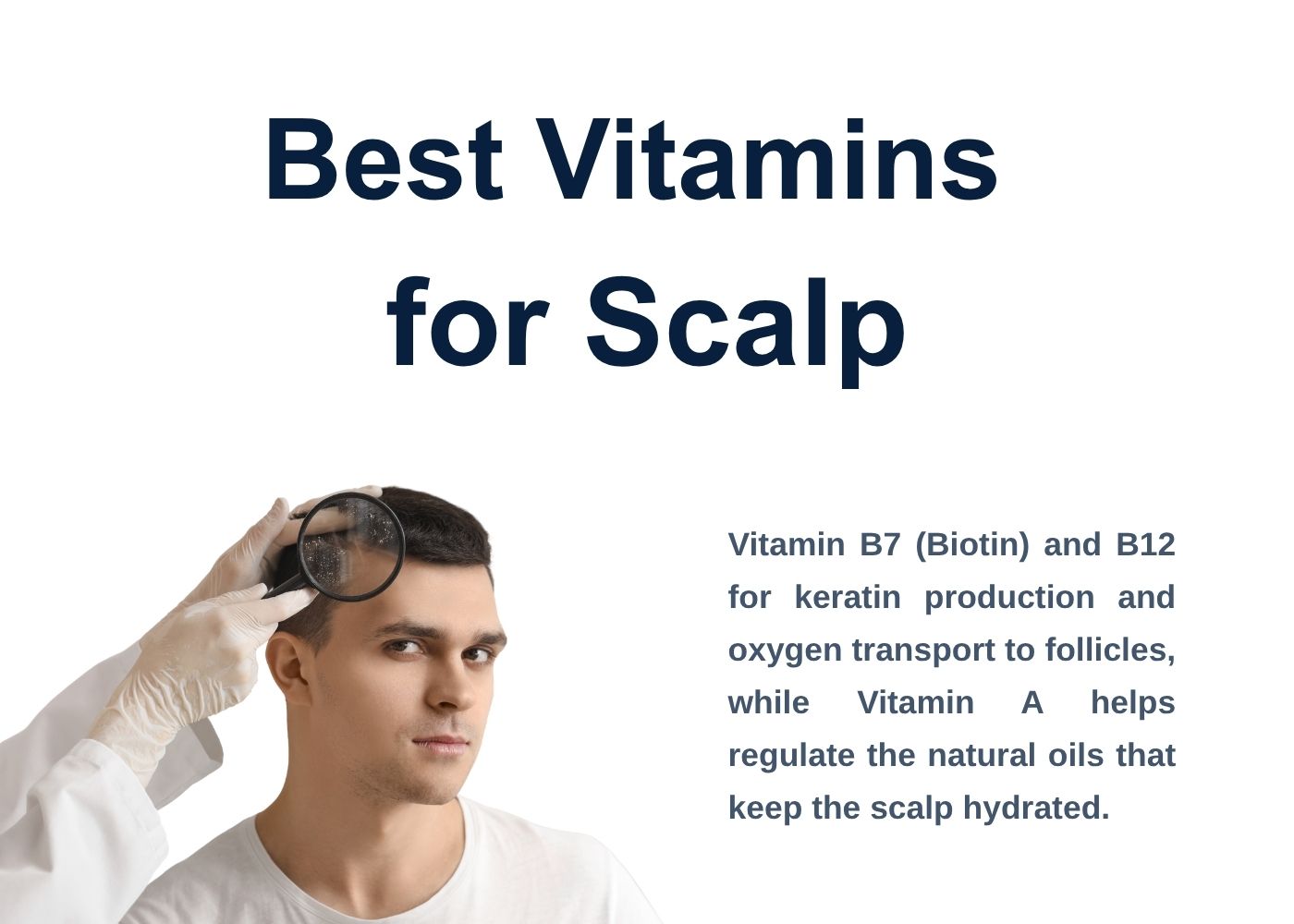
Adequate intake of essential vitamins is of great importance for supporting regrowth. Hair-growth vitamins ensure the healthy functioning of follicles, help hair grow faster, reduce shedding, and contribute to preventing irritation by maintaining moisture. A regular intake of Vitamins A, D, and E is commonly recommended — alongside B group vitamins and Omega-3 fatty acids.
Vitamin B5
Pantothenic Acid- Prevents dryness and itching by maintaining moisture balance
- Nourishes hair follicles directly
- Reduces hair loss and accelerates cell regeneration
Vitamin B7
Biotin- Supports essential keratin production
- Contributes to stronger and healthier hair growth
- Provides excellent prevention of dryness and irritation
- Strengthens the overall structure of the scalp
Vitamin B9
Folic Acid- Increases blood and oxygen circulation to follicles
- Leads to better nourishment and healthy growth
- Contributes to scalp repair and prevents thinning
Vitamin D
The Sunshine Vitamin- Supports hair growth and reduces shedding
- Regulates the healthy life cycle of follicles
- Aids in dryness, itching, and flaking prevention
- Notable anti-inflammatory effects on the skin
Vitamin E
Antioxidant Protector- Increases blood circulation within the scalp
- Promotes faster cell renewal
- Helps transport oxygen and nutrients to follicles
- Protects against dryness, irritation, and free radicals
Vitamin A
Growth & Moisture- Regulates sebum production to keep scalp moisturised
- Promotes cell renewal
- Contributes to stronger hair growth
- ⚠️ Should be consumed in balanced amounts — excess can cause hair loss
Carries oxygen to follicles, preventing a lifeless and thinning scalp. Low ferritin is one of the most overlooked causes of hair loss.
Required for follicle repair and maintaining moisture balance. Also inhibits 5-alpha reductase — the enzyme that converts testosterone to DHT.
Reduces inflammation and protects against fungal activity on the scalp. Important: excess selenium intake can be toxic — do not supplement without testing.
Weeks
Early Signs of Improvement
- Slight decrease in scalp itching, dryness, and irritation
- Increased energy levels (if previously deficient)
- No new hair growth yet — this is normal
Months
Visible Progress
- Reduction in hair loss may begin
- Hair may appear less brittle and shinier
- Scalp feels noticeably healthier overall
Month 3
New Growth Emerges
- New hair growth becomes noticeable
- Increased hair density and fullness
- Significant reduction in daily hair loss
Months
Full Transformation
- Thicker, stronger, healthier hair
- Balanced hair growth cycle restored
- Best results when combined with proper nutrition, lifestyle, and topical care
“Your hair follicles are essentially what you eat. When you don’t provide enough nutrients, the follicles cannot function properly — diets high in sugar can spike insulin, increase DHT, and trigger hair loss. In contrast, superfoods like spinach, avocado, and salmon provide the best environment for hair thickness.”
Here is a sample daily diet plan balanced with vitamins, minerals, healthy fats, and protein to support hair growth and scalp health.
- 2 boiled eggs (biotin, protein, vitamin D)
- 1 slice whole wheat bread
- 1 avocado slice (vitamin E, healthy fats)
- 1 bowl blueberries or strawberries (vitamin C, antioxidants)
- 1 cup unsweetened herbal tea (green tea preferred)
- Grilled salmon or mackerel (omega-3, vitamin D, protein)
- Spinach or chard salad with olive oil (iron, vitamins A & C)
- 1 bowl quinoa or bulgur (zinc, folate, plant protein)
- Yogurt (probiotic, B12, protein)
- A handful of pumpkin seeds or almonds (zinc, vitamin E)
- 1 banana or dried fig (magnesium, potassium)
- Chicken breast or lentil dish (protein, iron, vitamin B)
- Boiled broccoli and carrots (vitamins A, C, folic acid)
- 1 tsp flaxseed or chia seeds (omega-3)
- Warm milk or almond milk (B12, calcium)
- 1 whole walnut (omega-3, melatonin)
The vitamins covered above address the most well-known deficiencies — but three additional nutrients are consistently overlooked in scalp health guides, despite strong clinical evidence for their role in follicle function, collagen production, and hair cycle regulation.
Vitamin C
Collagen Synthesis & Antioxidant- Essential cofactor for prolyl hydroxylase — the enzyme that stabilises collagen's triple-helix structure in the scalp dermis
- Neutralises free radicals that damage follicular DNA and accelerate scalp ageing
- Significantly enhances non-haem iron absorption when taken alongside iron-rich foods — critical for follicle oxygenation
- A 2024 randomised controlled trial found that hydrolysed collagen + vitamin C supplementation improved scalp condition by 11% over 12 weeks vs placebo
- Best food sources: kiwi, red bell peppers, citrus fruit, strawberries, broccoli
Vitamin B12
Red Blood Cell Production- Required for the formation of red blood cells that carry oxygen to scalp follicles — deficiency directly reduces follicular oxygen supply
- Involved in DNA synthesis inside rapidly dividing hair matrix cells
- Deficiency is especially common in vegans, vegetarians, and people over 50 (reduced gastric acid impairs absorption)
- Symptoms often appear gradually — fatigue and hair thinning can be the only early signs
- Best food sources: meat, fish, eggs, dairy. Vegans must supplement — plant foods contain no B12
Magnesium
HPA Axis Regulation & Follicle Protection- The body depletes magnesium rapidly during the stress response — chronic stress and low magnesium form a damaging cycle that directly worsens cortisol-driven hair loss
- Magnesium regulates the HPA (hypothalamic-pituitary-adrenal) axis itself — deficiency worsens cortisol reactivity, amplifying stress-triggered shedding
- Inhibits calcium accumulation in scalp vasculature — high calcium deposits restrict blood flow to follicles, a major mechanism in male pattern thinning
- Involved in over 300 enzymatic reactions, including those governing protein synthesis and follicular cell energy metabolism
- Best food sources: dark leafy greens, pumpkin seeds, dark chocolate (85%+), avocado, almonds, black beans
Taking the right vitamins is only half the equation. How you take them determines how much your body actually absorbs. Several common supplement combinations actively block each other's absorption — a fact that most supplement labels don't mention.
| Combination | Effect | What to Do |
|---|---|---|
| Iron + Zinc | Compete Both use the same intestinal transporter — high-dose zinc blocks iron absorption significantly | Separate by at least 2 hours. Take iron in the morning, zinc in the evening |
| Iron + Vitamin C | Synergistic Vitamin C converts ferric iron to ferrous iron, dramatically increasing absorption | Always take together — a glass of orange juice with iron supplement increases uptake up to 6x |
| Vitamin D + Vitamin K2 | Synergistic K2 directs calcium to bones rather than soft tissue — prevents calcification of scalp vasculature | Always take together if supplementing vitamin D above 2,000 IU/day |
| Iron + Calcium | Compete Calcium significantly reduces iron absorption through shared intestinal channels | Never take simultaneously. Separate dairy meals from iron supplementation by 2+ hours |
| Iron + Tea or Coffee | Blocks Tannins and polyphenols bind to iron, reducing absorption by up to 60% | Avoid tea and coffee for 1 hour before and after taking iron |
| Magnesium + Vitamin D | Synergistic Magnesium is required to convert vitamin D to its active form — without it, D supplementation has limited effect | Take together. Magnesium deficiency is one of the most common reasons vitamin D supplementation "doesn't work" |
| Biotin + Raw egg whites | Blocks Avidin in raw egg whites binds biotin with high affinity, preventing absorption entirely | Always cook eggs before eating. Raw egg white consumption is a leading cause of biotin deficiency |
| Collagen + Vitamin C | Synergistic Vitamin C is a required cofactor for collagen triple-helix stabilisation — without it, collagen peptides cannot be properly assembled | Always take collagen alongside a vitamin C source (100–200 mg is sufficient).
See: Biotin vs. Collagen for Scalp Regeneration |
Before spending money on supplements, testing is essential. Many people supplement based on symptoms alone and miss the actual deficiency — or supplement something they don't need. These are the specific tests to request, and the target ranges relevant to scalp health specifically (which often differ from the broader "normal" ranges on lab reports).
The most important test for hair loss. Standard "normal" ranges are misleading — scalp health requires higher levels.
Target: 70–100 ng/mLMeasures active vitamin D status. Deficiency is strongly associated with telogen effluvium and alopecia areata.
Target: 50–80 ng/mLLow normal is not sufficient for hair health. Request active B12 (holotranscobalamin) for a more accurate picture.
Target: above 400 pg/mLZinc deficiency is common in those with oily scalps, frequent dandruff, or hair loss. Fasting sample gives most accurate result.
Target: 70–120 mcg/dLThyroid dysfunction is one of the most commonly missed causes of diffuse hair loss. Request TSH + free T3 + free T4 for a full picture.
TSH Target: 0.5–2.5 mIU/LNote: serum magnesium is a poor indicator of total body magnesium (most is intracellular). Symptoms + dietary history often more informative.
Target: 0.85–1.10 mmol/LNutritional support is a powerful tool for scalp health — but it has limits. Some conditions require medical diagnosis and treatment that supplements cannot address. If any of the following apply, a dermatologist or trichologist should be your next step before optimising your supplement routine.
🏥 Seek Professional Evaluation If:
- Hair loss is rapid, patchy, or affecting eyebrows and lashes (possible alopecia areata — an autoimmune condition)
- Hair loss continues after 6 months of corrected nutritional deficiencies
- Scalp shows persistent redness, scaling, or pustules that don't respond to antifungal or gentle care
- Hair loss follows a specific pattern — hairline recession in men, or central parting widening in women (androgenetic alopecia requires DHT management, not just vitamins)
- You are experiencing fatigue, cold intolerance, or weight changes alongside hair loss (thyroid screening essential)
- You are pregnant, postpartum, or have recently experienced significant physical stress (surgery, illness, crash dieting)
- Blood tests are repeatedly normal but symptoms persist — further investigation for absorption disorders (coeliac, Crohn's) may be warranted
Frequently Asked Questions
The Bottom Line
Scalp health starts from within. No topical product can fully compensate for nutritional deficiencies affecting your follicles from the inside.
- B vitamins (B5, B7, B9) support keratin, moisture, and follicle nourishment
- Vitamin D and Iron are the most commonly deficient — and most impactful to correct
- Vitamin A and Selenium must be balanced — excess causes more harm than deficiency
- Get tested before supplementing — food sources are always the preferred approach
- Allow 3–6 months of consistent nutrition for visible scalp and hair results
Feed your follicles well. The results compound over time.
Scientific References
- Reilly DM et al. A Clinical Trial Shows Improvement in Skin Collagen, Hydration, Elasticity, Wrinkles, Scalp, and Hair Condition following 12-Week Oral Intake of a Supplement Containing Hydrolysed Collagen. Dermatol Res Pract. 2024;2024:8752787. PMC11254459
- Pérez-Ishiwara DG et al. Vitamins as Key Modulators in Hair Growth Dynamics. Biomed J Sci Tech Res. 2024;51(1). biomedres.us/BJSTR.MS.ID.008597
- Boo YC. Ascorbic Acid (Vitamin C) as a Cosmeceutical to Increase Dermal Collagen. Antioxidants. 2022;11(9):1663. PMC9495646
Microneedling Pen Guide for Hair Growth
How to safely use derma pens to stimulate follicles and enhance serum absorption.
Read Article → TechnologyVibrating Scalp Massager Comb: Does It Work?
The science behind sonic vibration and its effect on scalp blood circulation.
Read Article → CareAnti-Hair Loss Satin Pillowcase Benefits
Why switching to satin can reduce hair friction, breakage, and overnight tangles.
Read Article →